Hair Restoration with Exosomes: A Comprehensive Guide
A comprehensive clinical guide to the latest breakthrough in non-surgical hair rejuvenation — how it works, who benefits, and what science says.
Published April 15, 2025 · 8 min read · Based on clinical reference material 80M+ People Affected by Hair Loss Non-Surg. Treatment Approach ~3–6 Sessions Typically Needed Minimal Side Effects Reported 4–6 Mo Avg. Time to Visible Results Section 01
Introduction: The Hair Loss Problem
Hair loss — medically known as alopecia — is one of the most common and emotionally impactful conditions affecting both men and women worldwide. More than 80 million people in the United States alone experience some form of hereditary hair loss. Beyond genetics, hair loss can be triggered by hormonal changes, medical conditions, nutritional deficiencies, stress, and the natural aging process.
Despite its prevalence, effective and lasting solutions have historically been limited. Pharmaceutical treatments like minoxidil and finasteride offer modest results and must be used indefinitely to maintain effects. Surgical hair transplants, while effective, carry significant risks, high costs, lengthy recovery periods, and limited donor availability.
In recent years, the field of regenerative medicine has opened entirely new doors. Among the most exciting innovations is exosome therapy — a cutting-edge, non-surgical approach that harnesses the body's own cellular communication mechanisms to stimulate hair regrowth from within. This guide explores the science, procedure, benefits, and expectations associated with exosome-based hair restoration.
🌿 A Natural Approach
Exosome therapy works with the body's own biological processes rather than introducing synthetic chemicals or surgical intervention — making it one of the most natural approaches available in modern hair restoration.
Section 02
What Are Exosomes?
Exosomes are extraordinarily small, membrane-bound vesicles — essentially nano-scale packages — that are naturally secreted by virtually all cell types in the human body. Measuring between 30 and 150 nanometers in diameter, they are far smaller than cells themselves, yet they carry a rich payload of biological cargo that plays a central role in cell-to-cell communication.
What Do They Contain?
Exosomes carry a sophisticated mix of biological molecules, including:
Proteins
Growth factors and signaling proteins that instruct target cells to activate repair and regeneration pathways.
Lipids
Fatty molecules that form the exosome membrane and play roles in cell signaling and structural integrity.
mRNA MicroRNA
Genetic material that can directly influence how recipient cells behave, altering gene expression to promote growth.
Growth Factors
Including VEGF, IGF-1, FGF, and KGF — key drivers of follicular activity and new tissue formation.
Scientific Origin
Exosomes were first described in the 1980s but were initially thought to be a cellular "waste disposal" mechanism. Only in the past two decades have researchers understood their true biological significance as sophisticated intercellular messengers. Today, exosomes derived from stem cells (particularly mesenchymal stem cells, or MSCs) are recognized as potent therapeutic agents because they replicate many of the regenerative effects of stem cell therapy itself — without the risks associated with live cell transplantation.
When exosomes are harvested from highly regenerative stem cell sources and concentrated for clinical use, they become powerful tools for tissue repair. Injected into the scalp, they act as biological "instruction packets," signaling dormant or weakened follicles to reactivate, increasing blood supply, reducing inflammation, and promoting the growth of new, healthy hair.
Section 03
The Science Behind Exosome Therapy
Understanding why exosome therapy works requires a brief look at the biology of hair follicles and the mechanisms that govern the hair growth cycle.
The Hair Growth Cycle
Each hair follicle cycles through three main phases:
Anagen (Active Growth Phase)
Lasting 2–7 years, this is when the hair shaft actively grows. Roughly 85–90% of hairs are in this phase at any time in a healthy scalp.
Catagen (Transition Phase)
A brief 2–3 week phase where growth stops and the follicle begins to shrink.
Telogen (Resting / Shedding Phase)
Lasting approximately 3 months, the old hair sheds and the follicle rests before the cycle begins again.
In androgenetic alopecia (the most common form of hair loss), follicles are progressively miniaturized by the hormone dihydrotestosterone (DHT), leading to shorter anagen phases and eventually permanent dormancy. Exosome therapy targets several critical points in this cycle.
Mechanisms of Action
Research identifies several key ways exosomes benefit hair follicles:
🩸 Angiogenesis (New Blood Vessel Formation)
Exosomes carrying VEGF (Vascular Endothelial Growth Factor) stimulate the formation of new capillaries, dramatically improving blood flow and nutrient delivery to follicles — a key factor in extending the anagen phase.
🧫 Follicle Stem Cell Activation
Signaling proteins within exosomes wake dormant follicle stem cells in the bulge region, kickstarting the growth cycle in follicles that have been inactive.
🛡️ Anti-Inflammatory Effects
Chronic inflammation around follicles is a major driver of hair loss. Exosomes contain anti-inflammatory cytokines that help create a healthier scalp microenvironment, protecting follicles from ongoing damage.
💪 Root Strengthening Volume Enhancement
Exosomes increase the synthesis of structural proteins like keratin and collagen, strengthening the hair shaft from the root and increasing each strand's diameter and resilience.
🔄 Reduction of Follicle Miniaturization
By modulating DHT sensitivity at the follicular level and improving the overall cellular environment, exosomes can slow or partially reverse the miniaturization process central to pattern hair loss.
Section 04
How Exosome Therapy Works — The Procedure
Exosome therapy for hair loss is an outpatient procedure typically performed in a dermatology or regenerative medicine clinic. The process is straightforward, minimally invasive, and generally well-tolerated.
Step-by-Step Procedure
Initial Consultation Scalp Assessment
The practitioner evaluates the degree and pattern of hair loss, medical history, and suitability for treatment. Trichoscopy (scalp imaging) may be used to assess follicle health and density.
Scalp Preparation
The treatment area is cleansed and a topical anesthetic or numbing spray is applied to maximize comfort during the injection process.
Exosome Solution Preparation
A pharmaceutical-grade exosome solution — typically derived from mesenchymal stem cells and rigorously tested for purity and potency — is prepared and loaded into fine-gauge syringes.
Microinjection into the Scalp
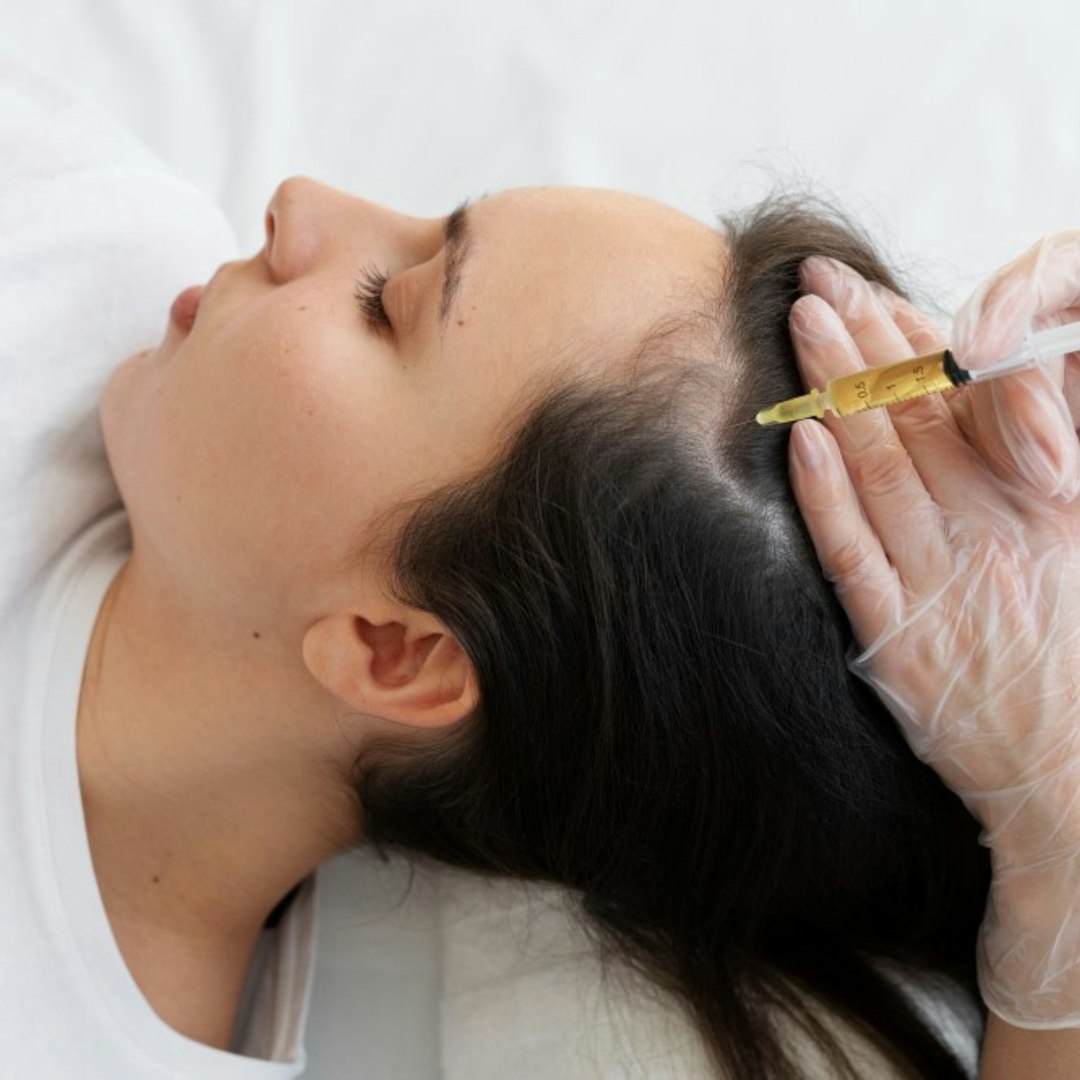
Using a series of precise microinjections, the exosome solution is delivered directly into the scalp at the level of the hair follicles — typically at 1 cm intervals across the thinning areas. The session usually takes 30–60 minutes.
Post-Treatment Care
Patients are advised to avoid washing their hair for 24 hours, minimize sun exposure, and temporarily abstain from strenuous exercise. No downtime is required.
Follow-Up Sessions
Most protocols involve 3–6 sessions spaced 4–6 weeks apart, followed by maintenance treatments every 6–12 months to sustain results.
⚠️ Exosome Sources Matter
The quality of the exosome preparation is critical. Patients should ensure their provider uses clinically validated, pharmaceutical-grade exosomes from reputable sources. The concentration of biologically active cargo (growth factors, mRNA) determines therapeutic efficacy.
Section 05
Benefits of Exosome Therapy
Exosome therapy offers a compelling combination of efficacy and safety that distinguishes it from virtually all other hair restoration modalities:
No Surgery Required
Achieves biological hair restoration without incisions, scarring, anesthesia, or the risks of a surgical procedure.
Minimal Discomfort
With topical anesthesia, the procedure is well-tolerated by most patients, causing only minor, brief discomfort.
No Downtime
Patients can return to daily activities immediately after treatment — no recovery period needed.
Natural Results
Stimulates the body's own follicles to grow, producing results that are entirely natural in appearance and texture.
Science-Backed
Grounded in well-established regenerative medicine research with a growing body of clinical evidence supporting its efficacy.
No Harsh Chemicals
Unlike topical treatments, exosome therapy does not expose the scalp or body to synthetic drugs with systemic side effects.
Strengthens Existing Hair
Increases root strength and hair shaft diameter, reducing breakage and shedding from existing hairs.
Combinable with Other Treatments
Can be combined with PRP, microneedling, or low-level laser therapy for enhanced results.
Section 06
Comparison with Other Hair Restoration Treatments
To appreciate where exosome therapy sits in the landscape of hair restoration options, it helps to compare it against the most common alternatives:
| Treatment | Invasiveness | Downtime | Side Effects | Maintenance | Natural Results |
|---|---|---|---|---|---|
| Exosome Therapy | Minimal | None | Very Low | Every 6–12 mo | Excellent |
| Hair Transplant (FUE/FUT) | High (Surgical) | 1–2 weeks | Moderate | One-time (often) | Excellent |
| Minoxidil (Topical) | Non-invasive | None | Scalp irritation, shedding | Daily (indefinite) | Moderate |
| Finasteride (Oral) | Non-invasive | None | Sexual side effects (men) | Daily (indefinite) | Moderate |
| PRP Therapy | Low (Injections) | Minimal | Low | Every 3–6 mo | Good |
| Low-Level Laser Therapy | Non-invasive | None | Very Low | Multiple/week | Moderate |
While hair transplant surgery remains the gold standard for severe hair loss where follicles are completely gone, exosome therapy offers a superior profile for patients in earlier-to-moderate stages, or for those who wish to avoid surgery entirely.
Section 07
Who Is a Good Candidate?
Exosome therapy is not a universal solution — its effectiveness depends on the presence of living follicles that can be reactivated. Understanding candidacy helps set realistic expectations.
✓ Ideal Candidates
- Early-to-moderate androgenetic alopecia (pattern hair loss)
- Diffuse hair thinning across the scalp
- Alopecia areata (patchy hair loss)
- Hair loss due to stress or illness (telogen effluvium)
- Postpartum hair loss
- Those seeking to enhance results after hair transplant
- People who want to avoid surgery or medications with side effects
- Patients who have not responded well to PRP alone
⚠ May Not Be Suitable
- Complete follicle loss (scarring alopecia, total baldness)
- Active scalp infections or inflammatory skin conditions
- Certain autoimmune disorders (requires medical evaluation)
- Pregnancy or breastfeeding
- History of keloid scarring
- Patients on blood thinners (requires temporary cessation)
👩⚕️ Consultation is Essential
Only a qualified dermatologist or hair restoration specialist can determine whether exosome therapy is appropriate for your specific condition. A thorough scalp assessment and medical history review are essential before beginning treatment.
Types of Hair Loss That Respond Best
Androgenetic Alopecia (Male Female Pattern) Telogen Effluvium Alopecia Areata Traction Alopecia (early stage) Postpartum Hair Loss Stress-Induced Hair Loss Nutritional Deficiency-Related Loss Post-Chemotherapy Recovery Section 08
Treatment Timeline What to Expect
Setting realistic expectations is crucial. Hair follicle regeneration is a biological process that takes time. Most patients undergo an initial series of sessions followed by a maintenance phase.
Typical Results Timeline
Week 1–2: Initial Response
Some patients notice reduced hair shedding within the first two weeks as the anti-inflammatory effects take hold and follicles begin to stabilize.
Month 1–2: Scalp Health Improvement
Improved scalp circulation and reduction in scalp inflammation. Some patients report the scalp feeling healthier and less sensitive.
Month 3–4: Early Regrowth Signals
Fine, new vellus hairs may become visible in treated areas. Existing hairs may appear thicker and stronger.
Month 4–6: Visible Improvement
Most patients see a clear increase in hair density and coverage. New terminal hairs emerge and thickening becomes noticeable to others.
Month 6–12: Peak Results
Full results typically peak around the 6–12 month mark after completing the initial treatment series. Overall density, volume, and hair quality are at their best.
Month 12+: Maintenance Phase
Annual or semi-annual maintenance sessions are recommended to sustain and further build upon results as the underlying cause of hair loss (e.g., DHT sensitivity) continues.
📊 Individual Results Vary
The rate and degree of response depend on factors including age, extent of hair loss, follicle viability, overall health, and the quality of the exosome preparation used. Younger patients with earlier-stage hair loss typically see the most dramatic improvements.
Section 09
Frequently Asked Questions
Is exosome therapy painful?
Most patients experience only mild discomfort during the procedure. Topical anesthetic is applied beforehand, and the microinjection technique used minimizes pain. Patients typically describe the sensation as similar to PRP therapy.
How long do the results last?
Results can last 12–24 months following an initial series of treatments. Maintenance sessions every 6–12 months help sustain and build upon results. Unlike medications, there is no abrupt reversal if you miss a session.
Are exosomes safe? Is there a risk of rejection?
Exosomes, because they are not living cells, carry no risk of immune rejection. They do not contain cellular DNA, which eliminates concerns about transmissible disease or unwanted cell replication. Clinical use has demonstrated a strong safety profile with minimal adverse events.
How does exosome therapy compare to PRP (Platelet-Rich Plasma)?
Both therapies stimulate hair follicles using biological signaling molecules. However, exosomes contain a far more concentrated and complex payload of growth factors and genetic material than PRP. Many practitioners consider exosome therapy a more advanced, potent evolution of PRP for hair restoration.
Can exosome therapy be combined with hair transplant surgery?
Yes. Exosome therapy is increasingly being used in conjunction with FUE or FUT hair transplants to improve graft survival rates, accelerate healing, and enhance the growth of transplanted follicles. It is also used post-transplant to boost overall density beyond what the graft alone achieves.
How many sessions will I need?
Most protocols involve 3–6 sessions spaced 4–6 weeks apart for the initial series, followed by maintenance treatments. The exact number depends on the severity of hair loss and individual response, which your provider will assess during follow-up evaluations.
Is exosome therapy FDA-approved?
As of 2025, exosome products for hair loss are not yet FDA-approved specifically for this indication, though they are offered as part of evolving regenerative medicine protocols. Patients should seek treatment from board-certified dermatologists or hair restoration specialists who use clinically validated, pharmaceutical-grade exosome preparations.
Section 10
Conclusion
Hair loss is a deeply personal challenge that affects confidence, self-image, and quality of life for millions of people. For generations, the options available were either limited in efficacy, laden with side effects, or required surgical intervention. Exosome therapy represents a genuine paradigm shift in this landscape.
By leveraging the body's own cellular communication infrastructure — delivering targeted regenerative signals precisely where they are needed most — exosome therapy offers what was previously unavailable: a safe, non-surgical, biologically natural method to stimulate real, lasting hair regrowth. It addresses not just the symptoms of hair loss but the underlying cellular environment that allows it to occur.
The treatment is not a cure for the genetic or hormonal drivers of pattern hair loss, but it is among the most powerful tools available to manage, reverse, and slow that process. Combined with appropriate lifestyle, nutritional support, and where needed, complementary treatments, exosome therapy can deliver transformative results.
If hair loss is affecting your confidence and you are seeking a solution that works with your body rather than against it, a consultation with a qualified hair restoration specialist to discuss exosome therapy is a meaningful and well-grounded next step.
✅ Key Takeaways
Exosome therapy is a safe, minimally invasive, non-surgical approach to hair restoration. It works by delivering concentrated regenerative signals directly to hair follicles, stimulating growth, strengthening existing hair, and creating a healthier scalp environment. Results build over 6–12 months and are maintained with periodic sessions.
Medical Disclaimer This document is intended for informational and educational purposes only and is based on the referenced clinical material. It does not constitute medical advice, diagnosis, or treatment. Always consult a qualified healthcare professional or board-certified dermatologist before beginning any hair restoration treatment. Individual results vary. Published April 15, 2025.